

Types of Composite Materials Used in Modern Manufacturing Industries
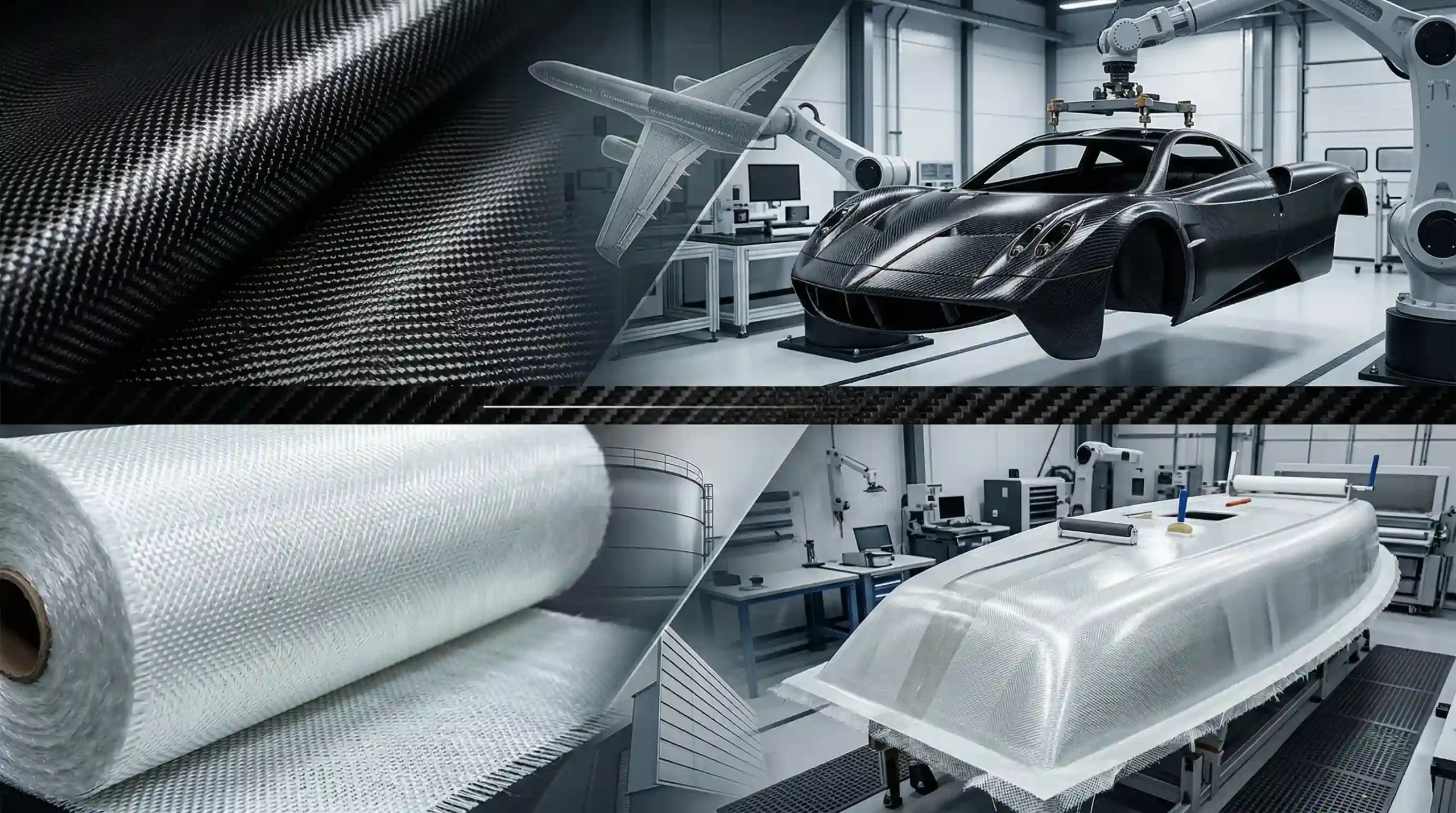
Today’s manufacturing industries are in a state of constant flux, and the need for materials that are strong, durable, and efficient has never been greater.
Composite materials are the answer, as they are made from the combination of two or more materials with different properties, giving the user superior properties compared to the use of a single material, such as metals or plastics.
It is important for industries such as aerospace, automobile, construction, and electronics to know about the kinds of composite materials, their structure, and their applications.
In this blog we will discuss the types of composite materials and the important composite materials for you.
What Are Composite Materials?
Composite materials are man-made materials that consist of two or more components with unique physical or chemical properties.
The components of composite material include a matrix, which is the basic material that holds everything in place.
And the reinforcement is the material that gives the composite its strength.
For example, fiberglass is composed of glass fibers and resin. The composite is strong and light due to the properties of the two components.
Also Read: Top 10 Plastic Resins for Injection Molding: Expert Guide
Importance of Composite Materials in Modern Manufacturing
This is because composites have shown their ability to surpass conventional materials. This is due to their ability to offer manufacturers the following benefits:
- High strength-to-weight ratio
- Excellent corrosion resistance
- Better durability
- Flexibility
- Low maintenance requirements
This is why these types of composites are highly suitable.
Classification of Composite Materials
The classification of composite materials is mainly based on the type of matrix. Each type of composite has its own unique characteristics and uses.
-
Polymer matrix composites (PMCs)
Polymer matrix composites are one of the major types of composite materials. They are composed of polymer resin and various types of fibers such as glass, carbon, and aramid.
These types of composites are relatively lightweight and are less susceptible to environmental damage. Therefore, they are used for a variety of applications such as car bodies and aircraft.
Composite materials examples include fiberglass and carbon-reinforced plastics.
-
Metal matrix composites (MMCs)
Metal matrix composites are composed of metals such as aluminum, magnesium, and titanium. These materials are also combined with ceramics and other types of fibers.
These types of composites are known for their high strength and resistance to high temperatures. Therefore, they are used for applications such as aircraft and engines.
An example of this type of composite material is aluminum combined with silicon carbide.
-
Ceramic matrix composites (CMCs)
Ceramic matrix composites are developed to overcome the brittleness in traditional ceramics. These composites have better durability and are not prone to crack formation due to the incorporation of reinforcement materials.
These composites are also useful in high-temperature applications such as jet engines, industrial furnaces, and heat shields.
Silicon carbide-reinforced ceramics are a good example of this type of composite.
Types of Composites Based on Reinforcement Structure
In addition to the classification based on the matrix material, composites can also be classified based on the structure of the reinforcement material.
-
Fiber-reinforced composites
Fibre-reinforced composites are one of the most commonly used composite materials in today’s industries. Fibre-reinforced composites incorporate fibres such as carbon, glass, or aramid for reinforcement.
-
Particulate composites
Particulate composites are those in which the particles are evenly distributed. These particles are also useful for increasing the wear resistance and stiffness of the composites.
A good example of a laminar composite is concrete. It is the most common form of a composite material and is used for construction purposes.
-
Laminar composites
Laminar composites are those that are obtained by stacking materials and then bonding them together. This type of composite is useful for increasing the strength and impact resistance.
Plywood and laminated glass are examples of laminar composites. They are used for construction.
Also Read: A Step-by-Step Guide to Choosing the Right Mold Release …
Composite Materials Examples in Industrial Applications
The practical applications of composite materials can be seen in the following industries:
- In the aerospace industry, composite materials are used in making aircraft parts using carbon. This makes the planes lightweight and fuel-efficient.
- In the automotive industry, these materials are used in making car parts using plastics and fibers. This makes the cars lightweight and ensures they meet safety requirements.
- In the construction industry, composite materials are used in making concrete for building structures.
- In the electronics industry, these materials are used in making printed circuit boards.
These composite material examples clearly indicate how important composite materials have become in the field of manufacturing.
Advantages of Using Composite Materials
The main reasons why composites have become so popular include:
- Lightweight and strong materials are perfect for performance-driven products
- Resistance to corrosion extends product life
- Tunable properties meets specific needs in industrial products
- Improves energy efficiency by saving fuel in transportation
- Long-term cost savings minimizes maintenance and replacement costs
These advantages make the types of composite materials extremely valuable.
Enhancing Composite Manufacturing Efficiency
To manufacture high-quality composites, precision is required along with efficient manufacturing solutions. This is where companies like Chem-Trend are playing a vital role in the manufacturing industry.
With their efficient release agents, purging compounds, and other process aids, Chem-Trend is helping manufacturers optimize their manufacturing processes to achieve high-quality composites.
Their products are being used to optimize manufacturing processes in industries to achieve better performance results.
Future of Composite Materials in Manufacturing
It is apparent that as industries continue to innovate, the future of composites is bright. New trends are being established, affecting the types of composites that are being created and utilized.
For example, sustainable composites, which are composed of biological materials, are being considered as industries look for ways to reduce their impact on the environment. Nanotechnology is also being utilized for the betterment of composite materials, resulting in stronger composites.
Furthermore, new manufacturing technologies, such as automation and 3D printing, are being implemented, allowing for faster and more cost-effective production of composites.
This is a testament that composite materials will always be a fundamental aspect of manufacturing.
To Wrap up
Composite materials have revolutionized the world of manufacturing through their exceptional performance, versatility, and durability.
The broad classification of composite materials and the availability of composite materials examples have helped industries benefit from composite materials that suit specific needs.
From polymer composite materials to ceramic composite materials, the variety in composite materials is helping industries grow through the support of industry leaders such as Chem-Trend.
The growth in composite materials is helping industries increase efficiency and quality in their products while ensuring sustainable growth.

 Argentina
 Brasil
 Canada
 Česko
Česko
 CIS (excluding Russia)
 Deutschland
 España
 France
 Italia
 México
 România
 Polska
 Türkiye
 United Kingdom
 United States
 Việt Nam
 中国
中国
 한국
한국
 日本
日本